
Roof care
The roof replacement process in Kansas City: steps, timing and what to expect
By Roof InspectorsUpdated 6 min read
The short answer
A roof replacement is a big project, but the process is fairly predictable. Knowing the steps helps you plan your days, ask better questions, and spot it when something is skipped.
Before the work starts
Inspection and estimate. Owens Corning, a shingle maker, says a contractor should inspect the roof, including the attic, to scope the job before giving you a detailed quote, and that it’s wise to get more than one quote.
The contract. The Kansas Attorney General recommends a contract that states exactly what work will be done, the quality and quantity of materials, warranties, the timeline, the total price and the payment schedule.
The FTC adds that you shouldn’t pay the full price up front, and shouldn’t make the final payment until the work is done and you’re satisfied.
Check the roofer. In Kansas, roofing contractors must be registered with the Attorney General. Here’s how to check a roofer’s registration in Kansas and Missouri, plus our questions to ask a roofer before you sign.
Materials and scheduling. You’ll pick a shingle line and color so materials can be ordered. Owens Corning says a dumpster may arrive one to two days before work starts, and materials may be delivered a few days early or that morning.
Plan where you’ll park, since the driveway may be blocked.
Permits in the Kansas City area
Permit rules are set city by city, and they change. Here’s what two cities say today:
- Kansas City, Missouri: The city’s permit-exempt list includes reroofing one- and two-family homes with a light roof covering. It doesn’t cover heavier coverings such as tile or slate, structural changes, or replacing 32 square feet or more of roof sheathing (decking), which need a permit. Exempt work still has to meet city code.
- Olathe: The city says permits aren’t required for reroofing or repairs down to the roof deck on one- and two-family homes and townhomes, and city inspections aren’t required either. The work must still follow the adopted International Residential Code and city code, and roofing contractors must hold a Johnson County license and be registered with the State of Kansas.
For other cities, including Overland Park, Kansas City, Kansas, Lee’s Summit and Independence, call the city’s permit office or ask your roofer to show you what applies.
In Kansas, a roofer applying for a permit must give the city its state registration number. The Kansas Attorney General also warns to be wary if a contractor asks you to get the permit, because it could mean the firm isn’t registered.
Curious what storms were recorded near you?
See how many significant storms are on record near your address, free in about 30 seconds. Add your contact details to see each storm’s date and hail size.
- Doesn’t file an insurance claim
- One local partner, never a pile-on
Installation day, step by step
Owens Corning and GAF describe the job in roughly this order:
- Prep and protection. The crew needs clear access. Move cars, grills, planters and anything near the house, secure pets, and ask whether the crew will cover shrubs and flower beds.
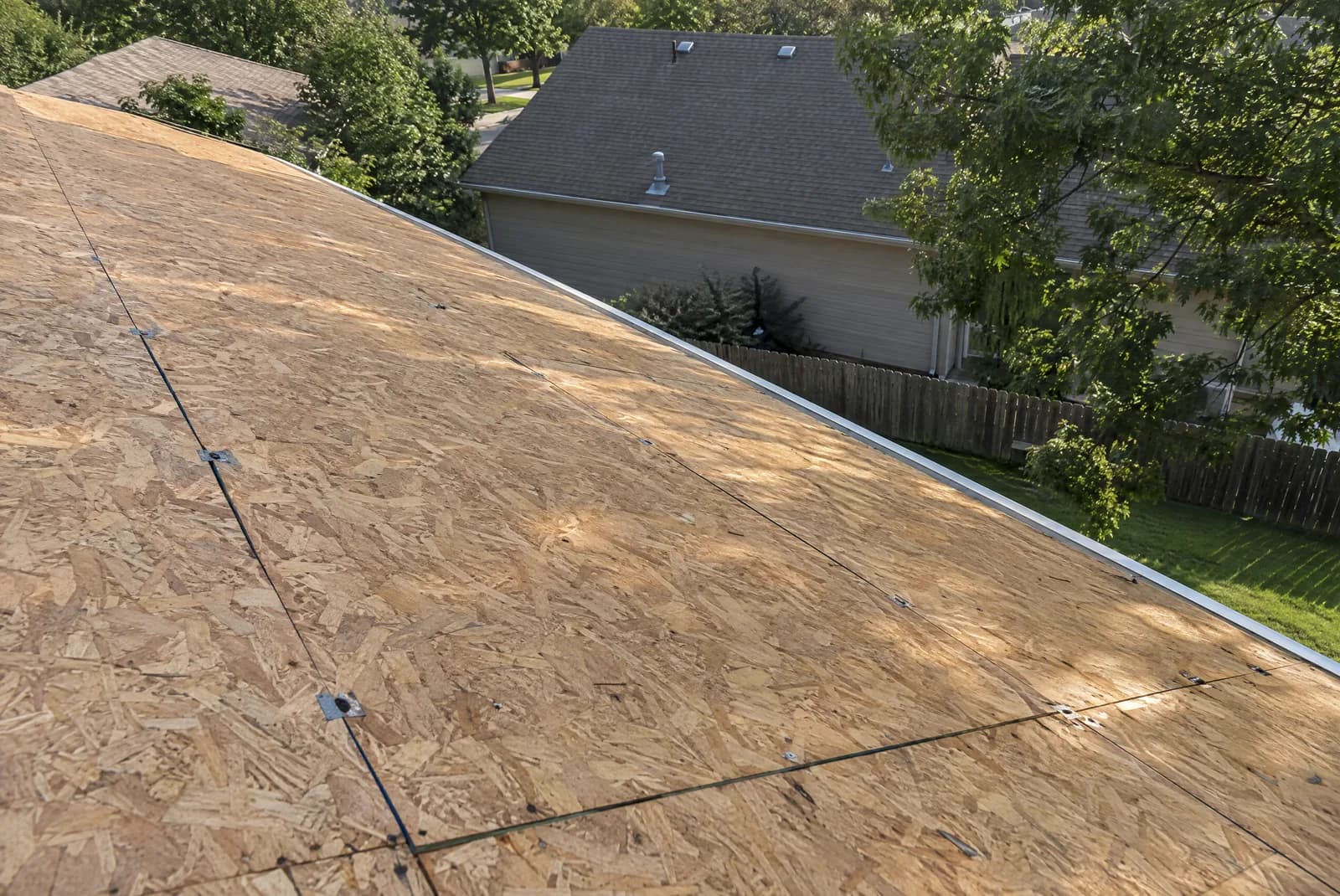
- Tear-off. The old shingles and underlayment come off down to the wood deck. GAF says this usually takes a few hours, and it’s the messiest part.
- Deck check and repair. With the deck exposed, the crew looks for rot or soft spots. GAF says replacing damaged decking can add anywhere from a few hours to an extra day. Decking is usually billed per sheet, so get the per-sheet price in writing.
- Drip edge and underlayment. Metal drip edge goes on the edges, then underlayment. Ice and water shield is used at the eaves and valleys.
- Starter strip and shingles. A starter strip seals the edges, then shingles go on in staggered rows.
- Flashing, pipe boots and vents. Flashing at walls and chimneys, pipe boots and vents are installed or replaced. Owens Corning notes contractors will probably replace or add vents to meet your roof’s ventilation needs.
- Ridge cap. Thicker ridge cap shingles finish the peaks and hips.
- Cleanup and walk-through. Owens Corning says contractors typically sweep the property for loose nails, and suggests asking for a second sweep if you’re not happy. Walk the job with the contractor before the final payment.
How long does it take?
GAF says an asphalt shingle replacement on an average-sized home can often be completed in one to two days. It can take longer when:
- Rotted decking has to be replaced
- The roof is steep (GAF says generally steeper than 8:12, where crews need extra safety gear and work slower)
- The roof has many angles, valleys, dormers or penetrations
- Rain is in the forecast, or frost delays the morning start in cold weather
- Attic ventilation needs to be corrected
Getting on the schedule can take longer than the job itself, especially after a big storm. Six weeks after the August 18–19, 2026 storm, KCTV5 reported that tarps still covered many roofs in some Wyandotte County neighborhoods.
Should you stay home during a roof replacement?
You can. Owens Corning says that in most cases you can plan to be home, but it can be very noisy and disruptive if you work from home. A few tips:
- Plan calls, naps and pet routines around a loud day or two
- Keep kids and pets away from the work area and the dumpster
- Ask the crew which doors to use and where they’ll set ladders
- Ask whether you should cover items stored in the attic
Can you replace a roof in winter?
Yes, with care. GAF says its Timberline HDZ shingles can be installed year round, but cold weather calls for extra steps:
- Hand-sealing. Shingles have sealant strips that need warmth to bond. If it’s too cold for the sealant to activate, GAF says installers should hand-seal shingles with dabs of roofing cement, following the shingle’s instructions.
- Warm storage. GAF recommends storing shingles somewhere heated above 70°F the day before a cold-weather install, so they’re easier to work with.
- Leak barrier limits. GAF says its leak barriers need a dry deck and air temperatures between 45°F and 120°F, with extra steps if the job must be done colder.
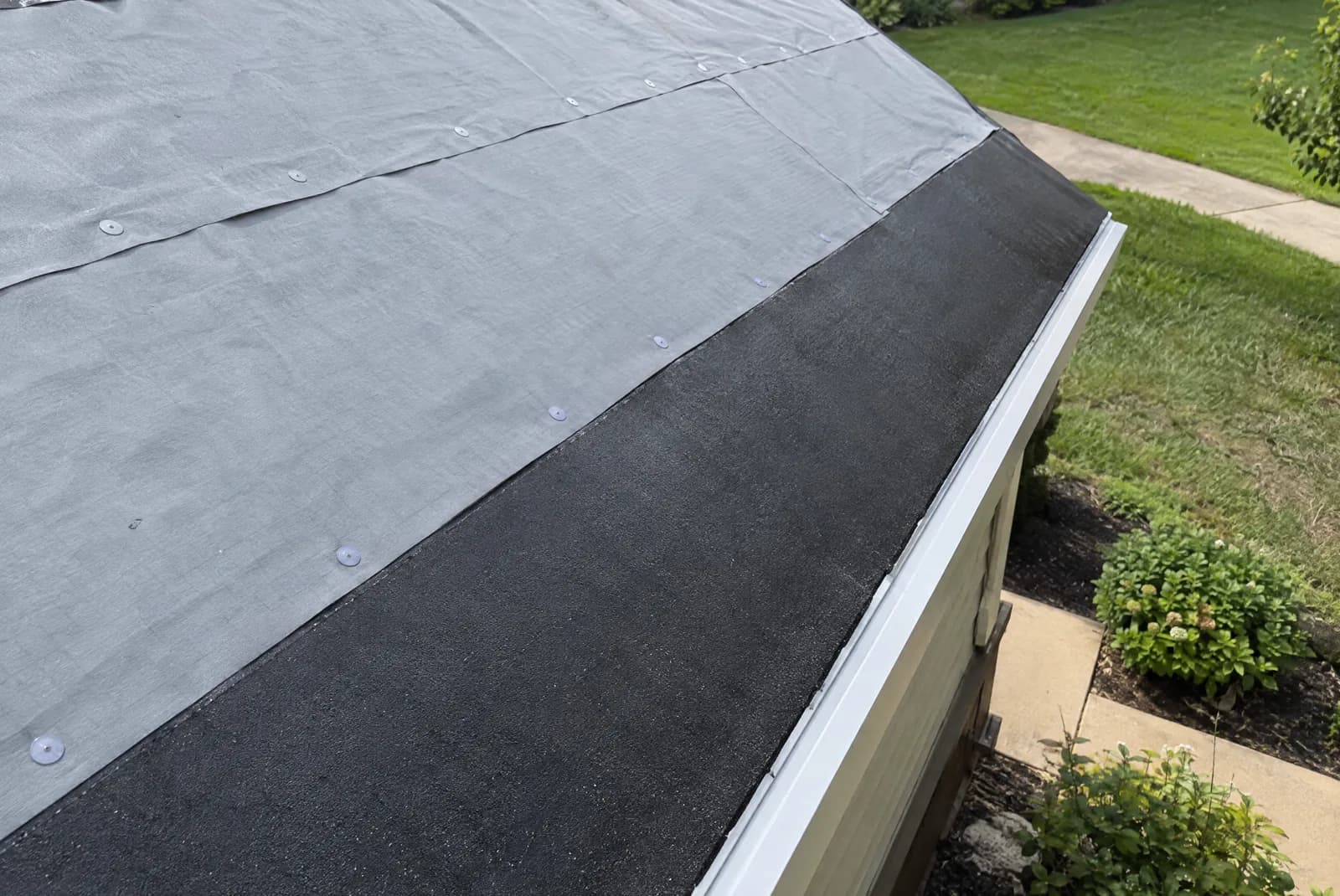
Ask your contractor how they handle cold-weather installs for the specific shingle they use. If damage happens in winter and the job has to wait, a tarp can protect the house until the weather allows.
What should be included? A checklist for your contract
- Tear-off and disposal of the old roof
- Deck inspection, with a written per-sheet price for replacement decking
- Drip edge on eaves and rakes
- Underlayment type, and ice and water shield at the eaves and valleys
- Starter strip, shingle brand, product line and color
- New flashing where needed (ask what will be replaced and what will be reused)
- Pipe boots and roof vents
- Ridge cap shingles
- Permit, if one is required, and who will pull it
- Cleanup and a nail sweep
- The manufacturer warranty and the contractor’s workmanship warranty, and who registers the warranty
- Start date, payment schedule, and the roofer’s Kansas registration number for Kansas jobs
If you file a claim, even after an inspection, your insurance company decides what’s covered and what it pays. Roof Inspectors and our roofing partners can’t make that decision or promise an outcome.
If insurance is paying for part of the job, read the contract closely and know your cancellation rights. Our registration guide covers the Kansas and Missouri rules.
After the job
Do a final walk-through, check the yard and driveway for nails, and register your warranty if the contractor doesn’t. Keep the contract, change orders, receipts and photos together.
Not sure your roof needs replacing? A free roof inspection can tell you what shape it’s in, and how much hail damage it takes to replace a roof explains the repair-or-replace decision.
Sources
Sources (9) · GAF, Owens Corning, City of Kansas City, Missouri and more
- GAF: How long does it take to replace a roof
- GAF: Installing Timberline HDZ shingles in different seasons
- Owens Corning: Roofing process step by step, what to expect
- City of Kansas City, Missouri: Building permit exempt work
- City of Olathe: Residential building permits
- Kansas Statutes 50-6,127: Duties of roofing contractor (registration number on permits)
- Kansas Attorney General: Roofing information for consumers
- FTC: How to avoid a home improvement scam
- KCTV5: Six weeks after storm, Wyandotte County residents say tarps and downed trees remain
How our free inspections work and who pays us
Common questions
Can new shingles go over my old roof?
What happens if it rains during my roof replacement?
This guide is general information for homeowners, not professional, insurance, or legal advice. How we write and update guides.