
Storms & hail
How much hail damage does it take to replace a roof?
By Roof InspectorsUpdated 6 min read
The short answer
“How many hail hits does it take to get a new roof?” is one of the most common questions after a storm, and there’s no single number.
A roof with a handful of damaged shingles on one slope is a very different job from one with damage on every slope. Here’s what drives the decision, and what a good inspector should document.
First, what counts as hail damage on shingles?
Not every mark matters equally. In a 2022 article for the roofing trade magazine Professional Roofing, researchers from the Insurance Institute for Business & Home Safety (IBHS) described what hail does to asphalt shingles:
- Hard hits can dent, tear or breach a shingle. Dents and tears can let water get into the shingle and, eventually, the roof deck.
- Hits knock off granules. Granule loss isn’t an immediate leak risk, but it exposes the asphalt to sunlight, which makes shingles more brittle and can shorten their life.
A hail “bruise” is a soft spot where the mat inside the shingle has been fractured. It often can’t be seen from the ground. Learn more about shingles and how they fail.
Small hail matters more than people think. IBHS research found that repeated small hail, under 1 inch, knocks granules off shingles and speeds up aging.
In its tests, shingles that had been weathered and hit by small hail became up to ten times more susceptible to damage from later large hail than new shingles. See what size hail damages a roof for a size-by-size guide.
The factors that decide repair or replacement
1. How widespread the damage is
Damage limited to a few shingles on one slope is often a repair. Damage spread across several slopes points toward replacement.
GAF, a shingle maker, offers two rules of thumb: replace if repairs would cost more than 25% of a new roof, or if 30% or more of the roof is damaged.
Those are one manufacturer’s guidelines, not an industry standard or an insurance rule.
2. The roof’s age and condition
GAF also points to age. In its guidance, a roof over 15 years old that shows damage may be the better candidate for replacement, while a younger roof with smaller problems is often worth repairing. Our roof age calculator can help you estimate where yours stands.
3. Whether the old shingles can be repaired
A repair means lifting the shingles around the damaged ones and nailing in new ones. Shingles get more brittle as they age and lose granules, so ask the inspector whether your shingles can be lifted and repaired without breaking, and why.
4. Matching
Shingle product lines and colors change over time, and a roof’s color changes as it weathers. A patch that doesn’t match is a cosmetic issue for some homeowners and a deal-breaker for others.
How matching is handled in an insurance claim depends on your policy and your state’s rules.
5. Code and the layers already on the roof
Building codes limit when a new layer can go over an old one.
Under the International Residential Code, as summarized by the City of Olathe, a new roof covering can’t be laid over a roof that already has two or more layers, over one that’s water-soaked or badly deteriorated, or over slate, clay, cement or asbestos-cement tile.
In Kansas City, Missouri, a reroof needs a permit if 32 square feet or more of decking is replaced or the new covering is heavy, like tile or slate. Read more in our roof replacement process guide.
6. The other parts of the roof system
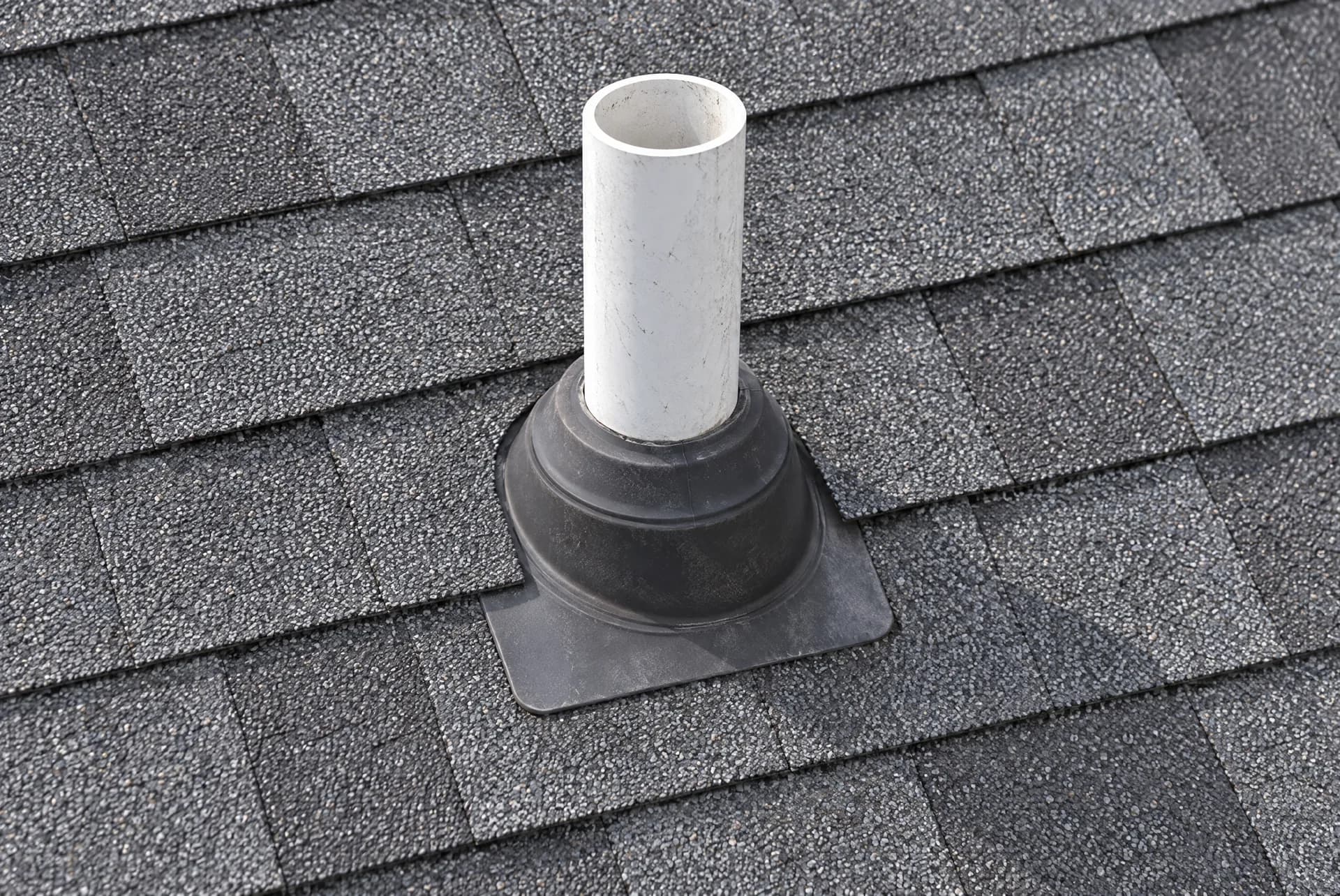
Hail damage isn’t only about shingles. Vents, pipe boots, flashing and gutters can often be repaired or replaced on their own. Check them too; our guide to hail damage on siding and gutters shows what to look for.
Curious what storms were recorded near you?
See how many significant storms are on record near your address, free in about 30 seconds. Add your contact details to see each storm’s date and hail size.
- Doesn’t file an insurance claim
- One local partner, never a pile-on
What a good inspector documents
Whatever the outcome, you should be able to follow the reasoning. A thorough hail inspection report includes:
- Roof basics: material, approximate age, number of layers and the number of slopes.
- Slope-by-slope findings: what was found on each slope, with photos. A wide shot shows where; a close-up with something for scale shows what.
- Soft-metal evidence: dents on vents, flashing and gutters that help show hail size and direction.
- Damage vs. wear: hail damage kept separate from normal aging, blistering, or installation problems.
- Repairability: whether the shingles can be repaired without breaking, and whether matching shingles are likely available.
- Storm context: the date of the storm and what was recorded at the address. A free storm history check shows how many significant storms are on record near your home; add your contact details to see each storm’s date and hail size.
- Limitations: anything that couldn’t be reached or seen.
See our full roof inspection checklist for more.
Insurance: what to know without the sales pitch
Roof Inspectors doesn’t file claims or tell you whether to file one. If you file a claim, even after an inspection, your insurance company decides what’s covered and what it pays. Roof Inspectors and our roofing partners can’t make that decision or promise an outcome.
A few neutral facts from state regulators can help you ask good questions:
- Your insurer decides coverage. An adjuster inspects the damage and reviews your policy to calculate what the insurance company will pay, according to Missouri’s Department of Commerce and Insurance.
- How your policy pays matters. Missouri’s department explains that replacement cost value (RCV) coverage pays to repair or replace without deducting for depreciation, actual cash value (ACV) coverage pays the depreciated cost, and functional replacement cost pays for a functional replacement. Normal wear and tear isn’t covered.
- Deductibles can differ. The same guide suggests asking whether your policy has a separate deductible for hail or wind.
- Small damage is a judgment call. Missouri’s guide notes that if damage is minor, you might decide to pay for repairs yourself, but also that you might not be able to see all the damage.
- Cosmetic damage can be treated differently. Some policies include endorsements that exclude cosmetic hail damage to roofs. Texas’s insurance department, for example, defined cosmetic damage as damage that changes a roof’s appearance without letting water in or keeping the roof from doing its job. Check your own policy’s wording.
If you have questions about your policy, call the Kansas Insurance Department at 800-432-2484 (in Kansas) or the Missouri Department of Commerce and Insurance at 800-726-7390. Our insurance questions page explains how to keep the inspection and the insurance decision separate.
The bottom line
The answer to “how much hail damage” is found on your roof, not in a rule of thumb. Check what was recorded at or near your address, then have the roof looked at by someone who will show you photos and explain the reasoning.
Through Roof Inspectors, a free roof inspection is done by an independent roofing partner that serves your area, and the decisions stay yours. Learn more about hail damage and your roof.
Sources
Sources (8) · Professional Roofing, IBHS, GAF and more
- Professional Roofing: “Hail no!” by Ian Giammanco and Anne Cope, IBHS (March 2022)
- IBHS: Impact testing of high concentrations of small hail
- GAF: Understanding residential roof repairs, how do I know if my roof needs to be replaced? (April 2026)
- City of Olathe: Residential building permits (reroofing code summary)
- City of Kansas City, Missouri: Building permit exempt work
- Missouri Department of Commerce and Insurance: Raising the roof on insurance coverage
- Missouri Department of Commerce and Insurance: Post-disaster claims guide (PDF)
- Texas Department of Insurance: Bulletin B-0030-98
How our free inspections work and who pays us
Common questions
Is the insurance adjuster deciding the same thing as my roofer?
Can hail damage show up later?
This guide is general information for homeowners, not professional, insurance, or legal advice. How we write and update guides.